

 English








Sixty Steps to Making Your Own Leather Watch Strap
The specialists in leather goods who craft watch straps made of leather are talented artisans who demonstrate exceptional skill. Their manufacturing process is a harmonious blend of tradition and innovation. Their work requires a series of steps in which every movement is marked by precision and passion. One of their secrets lies in their mastery of techniques passed down from generation to generation, combined with a deep understanding of materials and modern tools. To successfully design a strap made of leather for an Constellation by Omega, a Mille Miglia by Chopard, or other luxury watches, the artisans meticulously craft the leather, taking care to select both its color and its buckle for a beautiful finish.
The possibilities are endless when it comes to creating a leather strap that perfectly complements a watch. Do you own a Breguet Reine de Naples or a Jaeger-LeCoultre Master? Opt for a high-end leather watch strap, handcrafted by expert artisans.
Sixty steps are required to craft a leather watch strap, divided into six distinct manufacturing processes:
1. Preparing the tools:
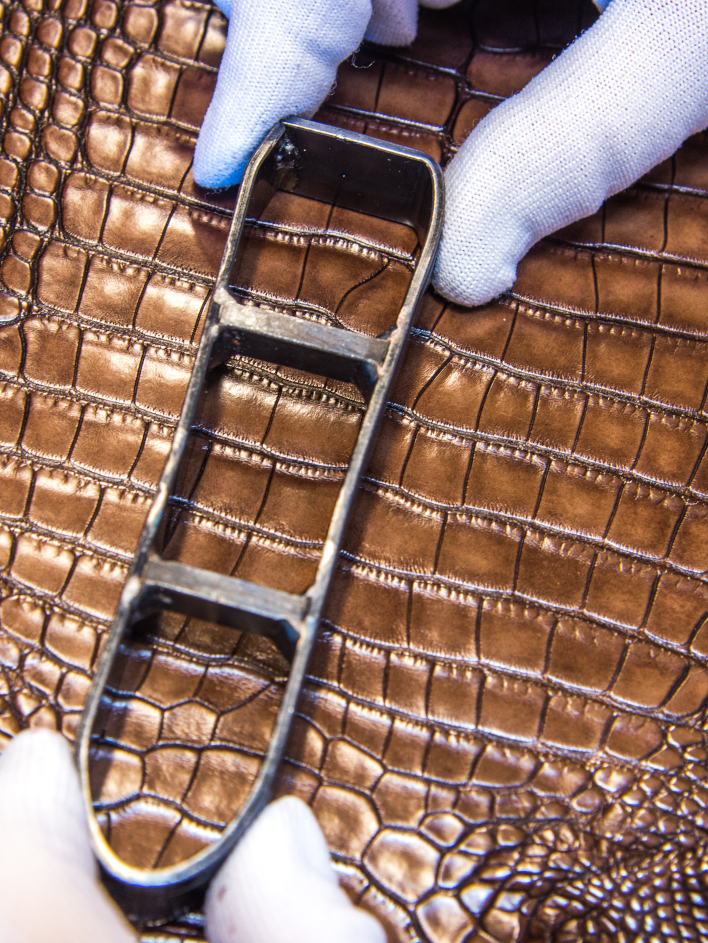

Before you start making a watch strap made of leather, it’s important to be well prepared. Thick, durable leather thread is necessary for leatherworkers to create the stitches. Curved needles are sometimes easier to use when working with leather. Various tools are also needed to punch holes in the leather, such as an awl or a punch. A sharp knife, scissors, or a suitable utility knife are also essential for cutting leather with precision. Protecting the work surface is essential. With this in mind, professionals typically work on a cutting mat. Using leather glue is also helpful for securing certain parts of the bracelet. Although optional, leather polish helps protect the leather and give it a shine. For exotic leathers, our artisans use a natural agate stone treatment to give them that chic and elegant luster.
2. Choosing the leather:
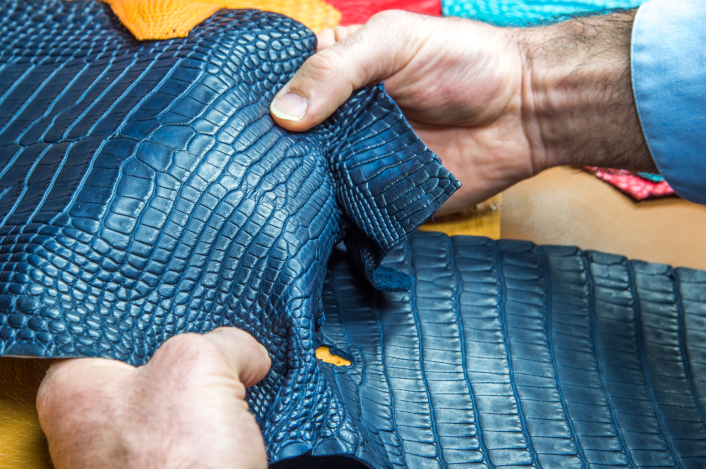
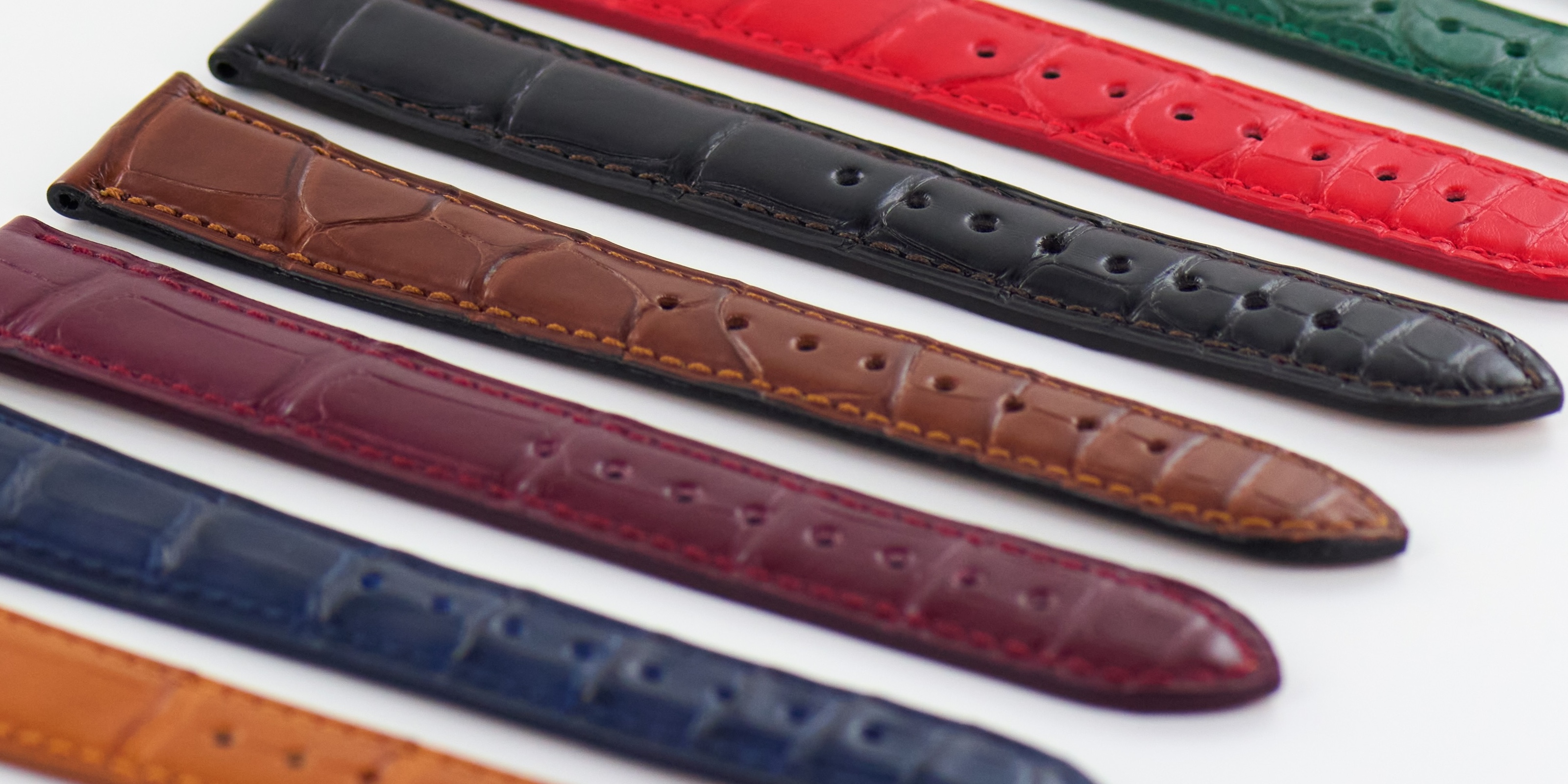
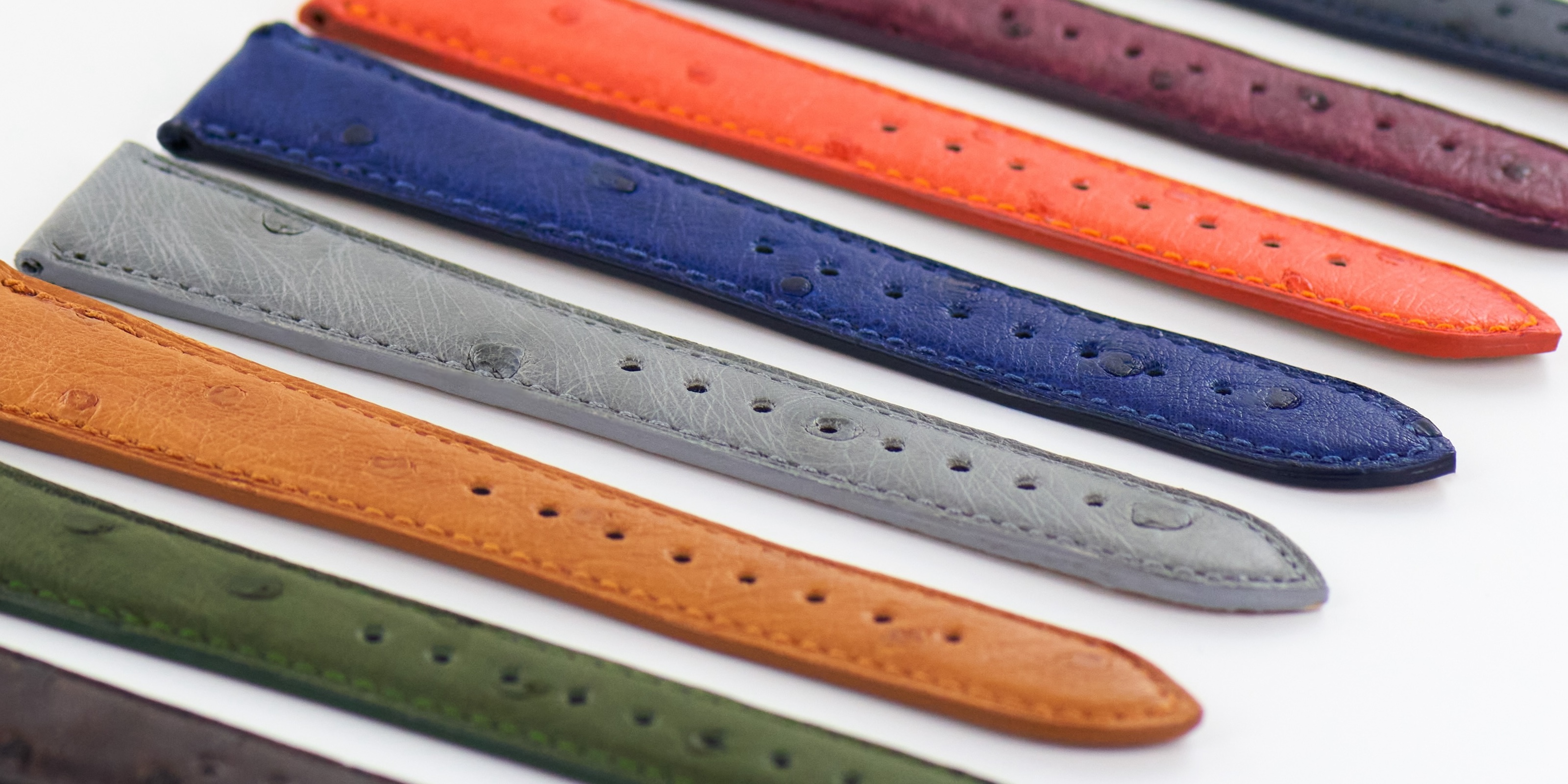
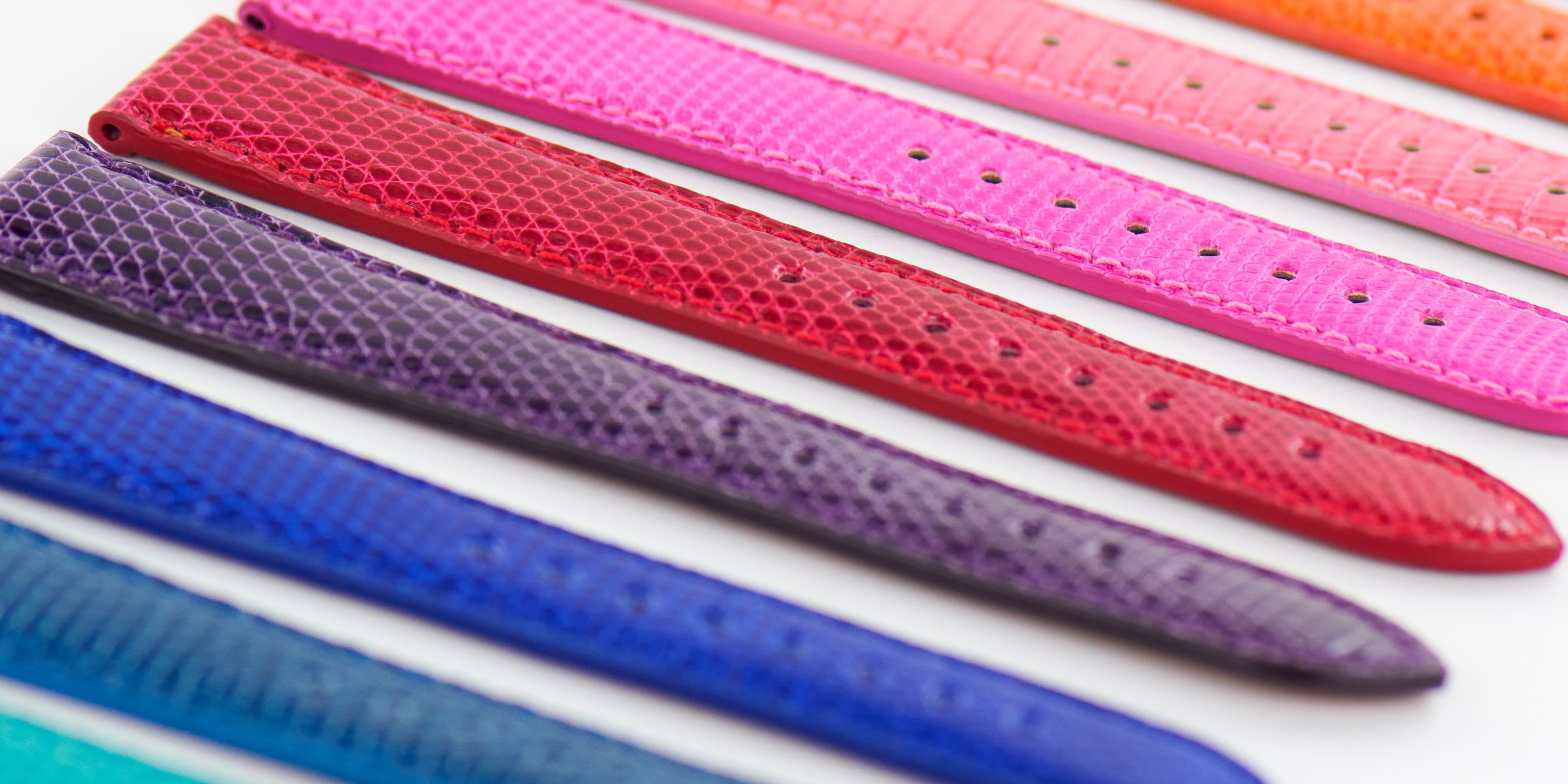
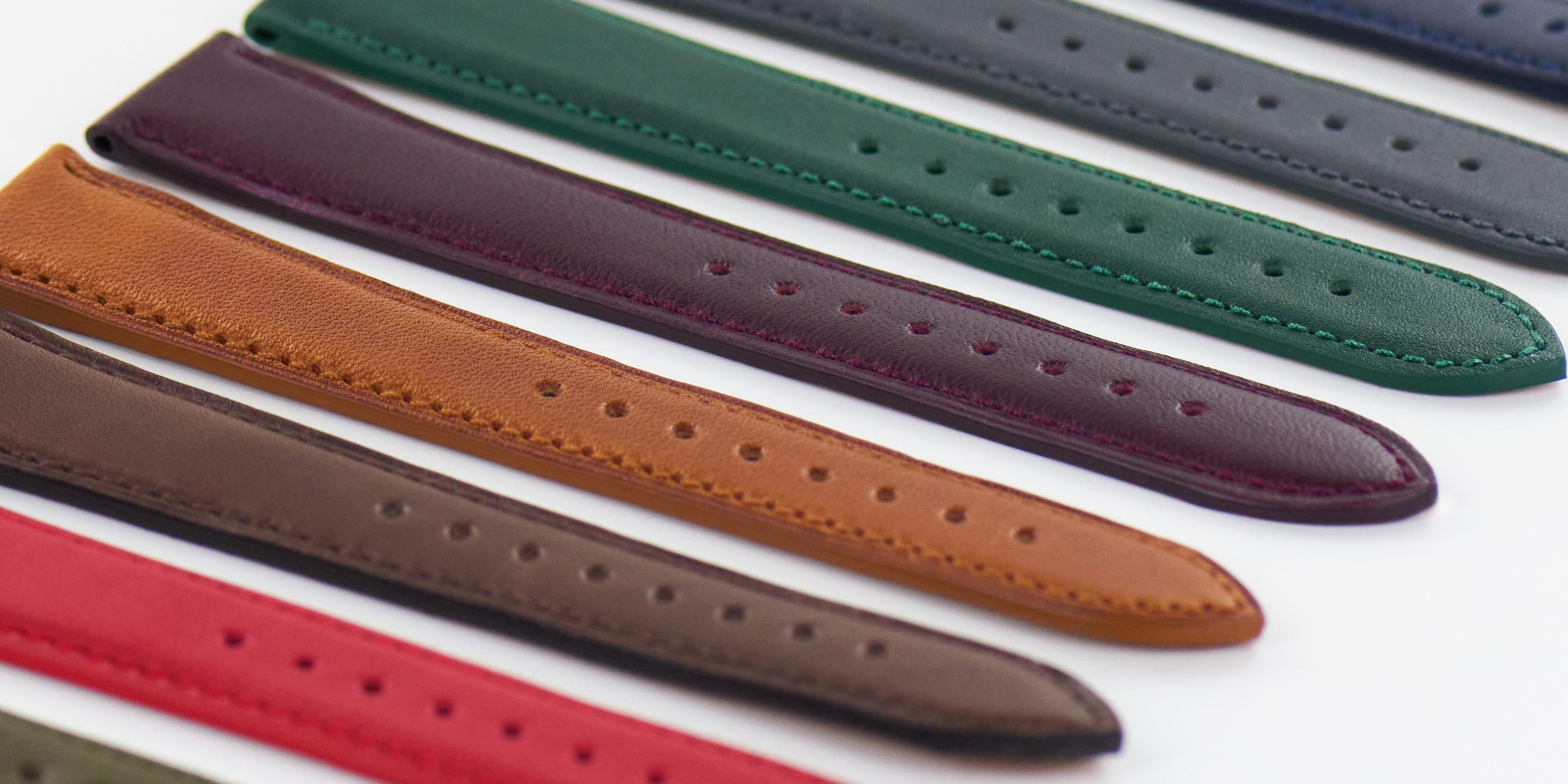
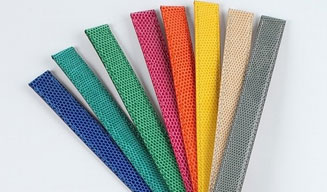
It all starts with the choice of leather. The leatherworker selects high-quality raw materials. Their choice may be based on various criteria, such as texture, color, and durability. Tanned leathers are often prized for their quality and their patina, which improves with age. calfskin, lizard, alligator, ostrich, or full-grain leather are highly prized for watch straps.
3. Preparing the leather:
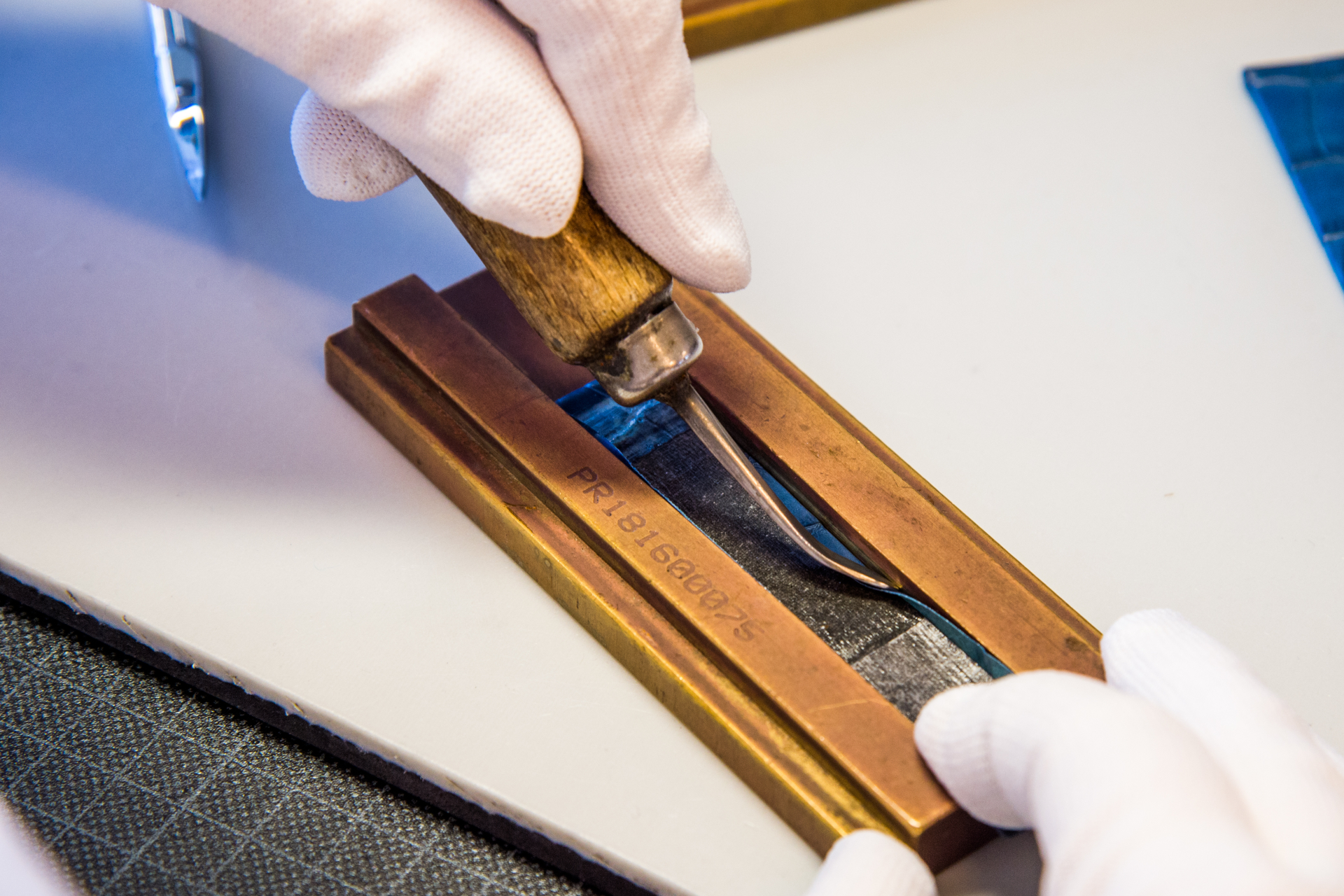
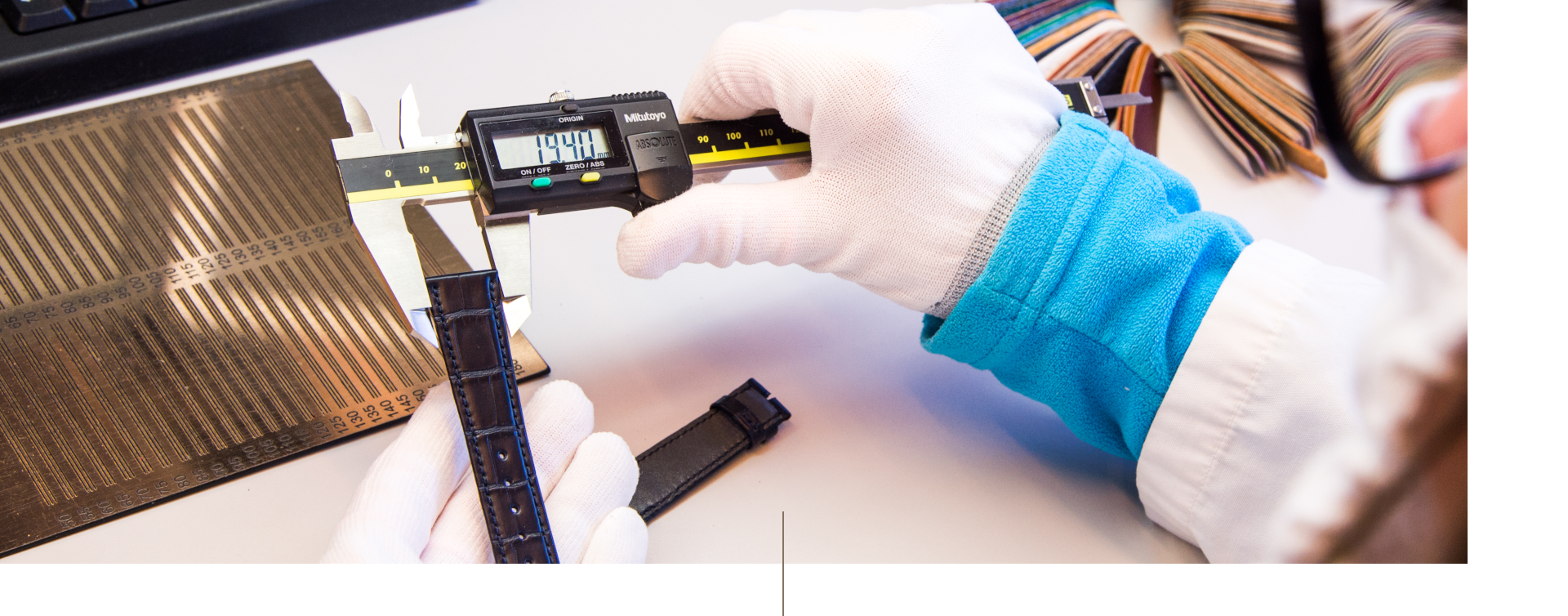
Before beginning the manufacturing process, it is essential to prepare the leather. The leatherworker measures the width between the lugs of the watch to determine the width of the strap. The lug-to-lug distance is the distance between the two lugs on the case of your watch, where the strap attaches. Knowing this measurement is essential for crafting a strap made of leather that fits the watch properly. Contemporary models for men typically feature lug-to-lug widths of 18 or 20 millimeters, such as the Everytime by Tissot and the Formula 1 by Tag Heuer. A width of 16 millimeters is more common for watches designed for women. The lug width of vintage timepieces released in the 1960s or 1970s, such as the Rolex Oyster Date, is 19 millimeters. After taking the measurements, the leatherworker draws a pattern on paper and then transfers it to the leather. If the dimensions are standard, we also have die-cutters in our workshop that simplify the cutting of the leather, which is done using a press.
4. Cutting and Assembly:
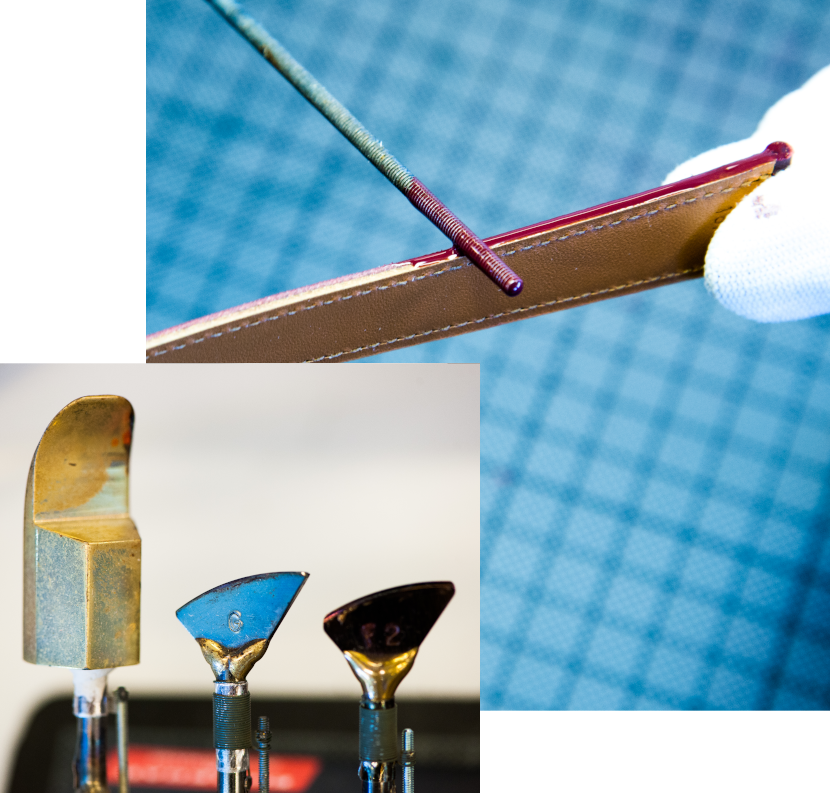
The artisan who makes watch straps for watches uses appropriate tools to cut the leather according to the chosen design. For example, he may use leatherworking scissors or a rotary cutter to achieve clean edges. The leather is then carefully cut according to the pattern and the desired dimensions for the strap. He then marks the stitching holes using a marking tool, as well as the notches for the fasteners. Next, they glue the various layers of leather together if necessary and assemble the different parts of the bracelet, making sure they align properly.
5. Punching the holes and hand-stitching:
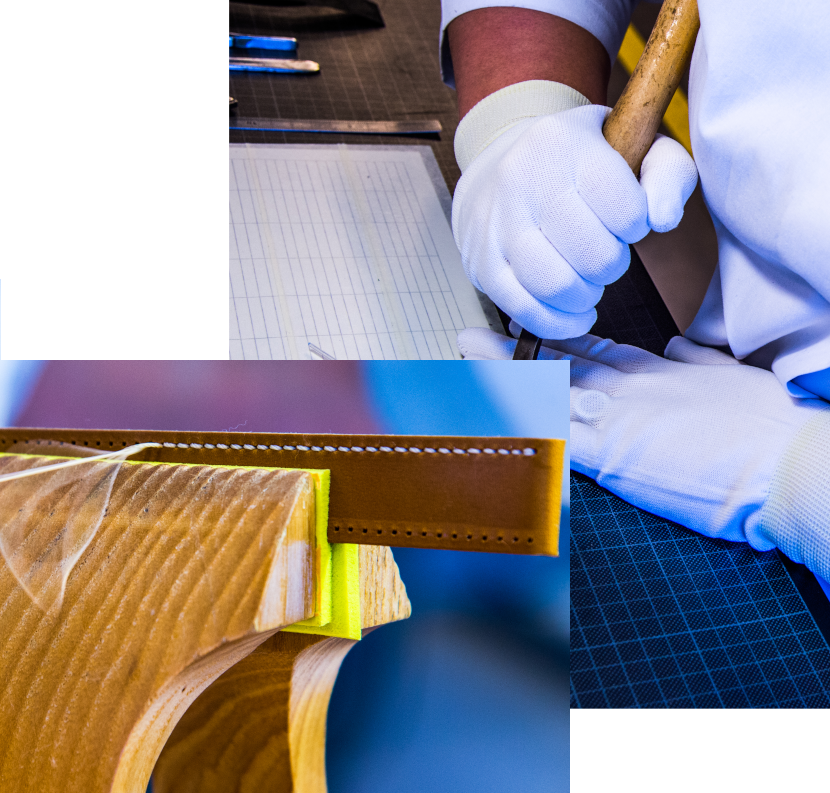
Using an awl or a needle, the leatherworker punches holes along the bracelet. These holes will be used to thread the sewing thread. Hand stitching is a crucial step in the manufacture of a leather watch strap. The leather craftsman uses strong thread and an appropriate stitch to ensure the strength and durability of the strap. The saddle stitch is often preferred for its sturdiness and aesthetic appeal.
6. Finishes:
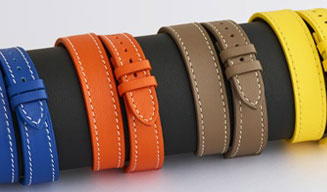
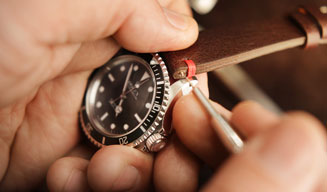
Once the stitching is complete, it’s time to refine the finishing touches. This step may include smoothing out the seams and adding a buckle. The watch strap manufacturer can also take advantage of this step to personalize their creation. They can add decorative details such as embossing, dyeing, or engraving to make the watch strap unique.
Leather: A Material with Many Advantages for Customizing Your Watch Strap
Leather watch straps offer a multitude of advantages, combining functionality, aesthetics, and durability. Natural leather molds to the shape of your wrist over time, providing a perfect fit that becomes even more comfortable the more you wear it. Leather also has the ability to “breathe”: it does not cause skin irritation and does not trap heat, ensuring a comfortable wearing experience in all seasons.
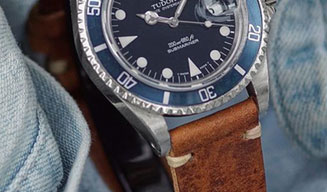
In terms of aesthetics, straps made of leather add a touch of timeless sophistication to any watch. Whether it’s smooth, elegant leather for a classic look or distressed leather for a vintage, casual vibe, the styling possibilities are endless. Leather also develops a unique patina over time, bearing witness to the adventures and experiences you’ve shared with your watch, making it an accessory rich in history and character.
Durability is also a major advantage of watch straps made from high-quality leather. Premium leather is resistant to everyday wear and tear. With proper care, it can last for years, even decades. Unlike other materials that can deteriorate quickly, leather can be restored and refreshed to extend its lifespan. Your choice of leather therefore yields both environmental and economic benefits in the long term.
Leather watch straps offer unmatched versatility. Whether you’re wearing a watch for a formal or casual occasion, leather adapts perfectly to any situation. It pairs just as easily with an elegant business outfit as it does with a casual look, adding a touch of understated sophistication to every occasion.
Leather watch straps are much more than just an accessory. They are the perfect blend of comfort, timeless style, and durability. The leather watch strap is an ideal choice for any watch enthusiast who cares about both style and quality.


